




- Back to School
- |
- Book Recommendations
- |
- Building Community
- |
- Picture Books
- |
- Teacher Ideas
- |
- The First Few Weeks of School
One Word Goal Setting for Kids: A Meaningful Back-to-School SEL Activity
By Mary Montero
Share This Post:
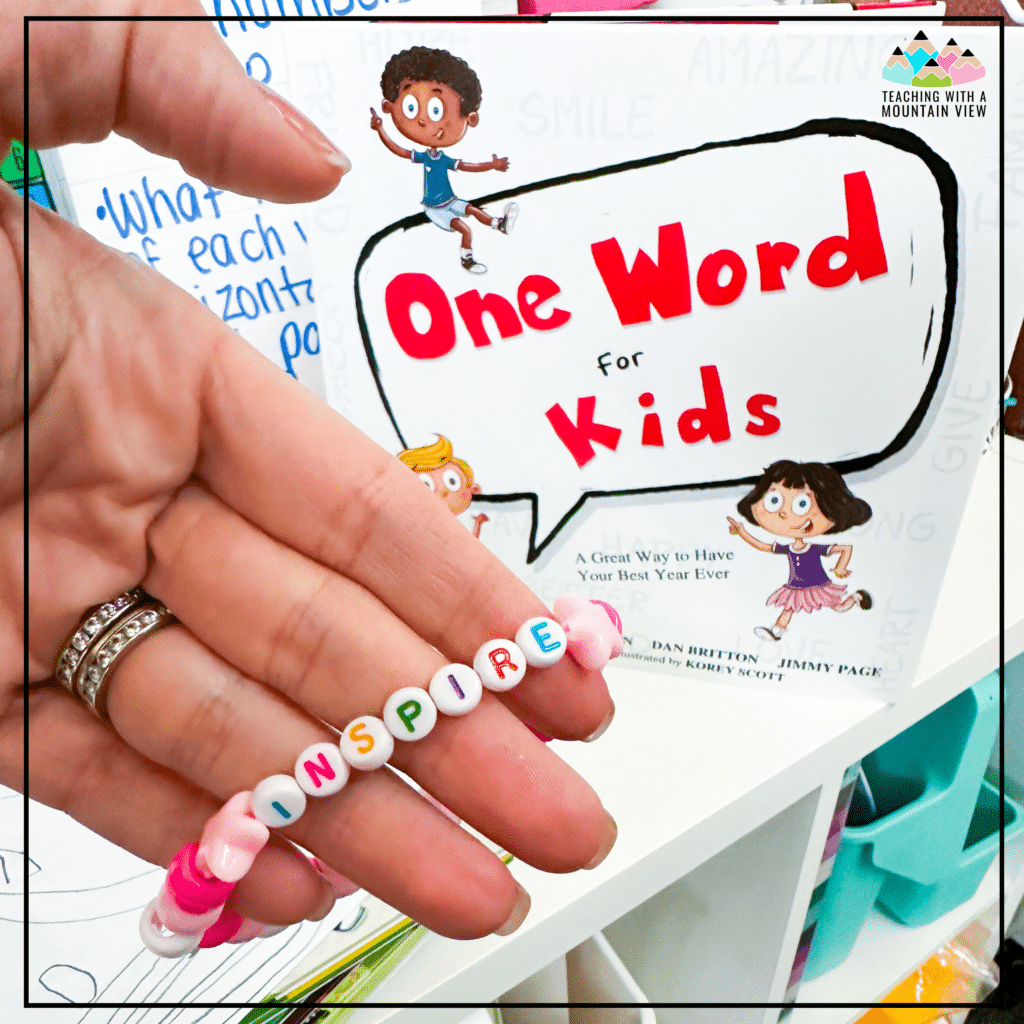
I’ve had goal setting in my First Week of School Lesson Plans since I first started teaching. However, the way I’ve accomplished goal setting has significantly changed over the years. A few years ago, I started using the book One Word for Kids to help my students set goals, and it has quickly become one of my favorite back-to-school traditions! Over the years, the way I teach students to set their one-word goals has evolved, and I’d love to share all the different ways I’ve implemented one-word goal setting!
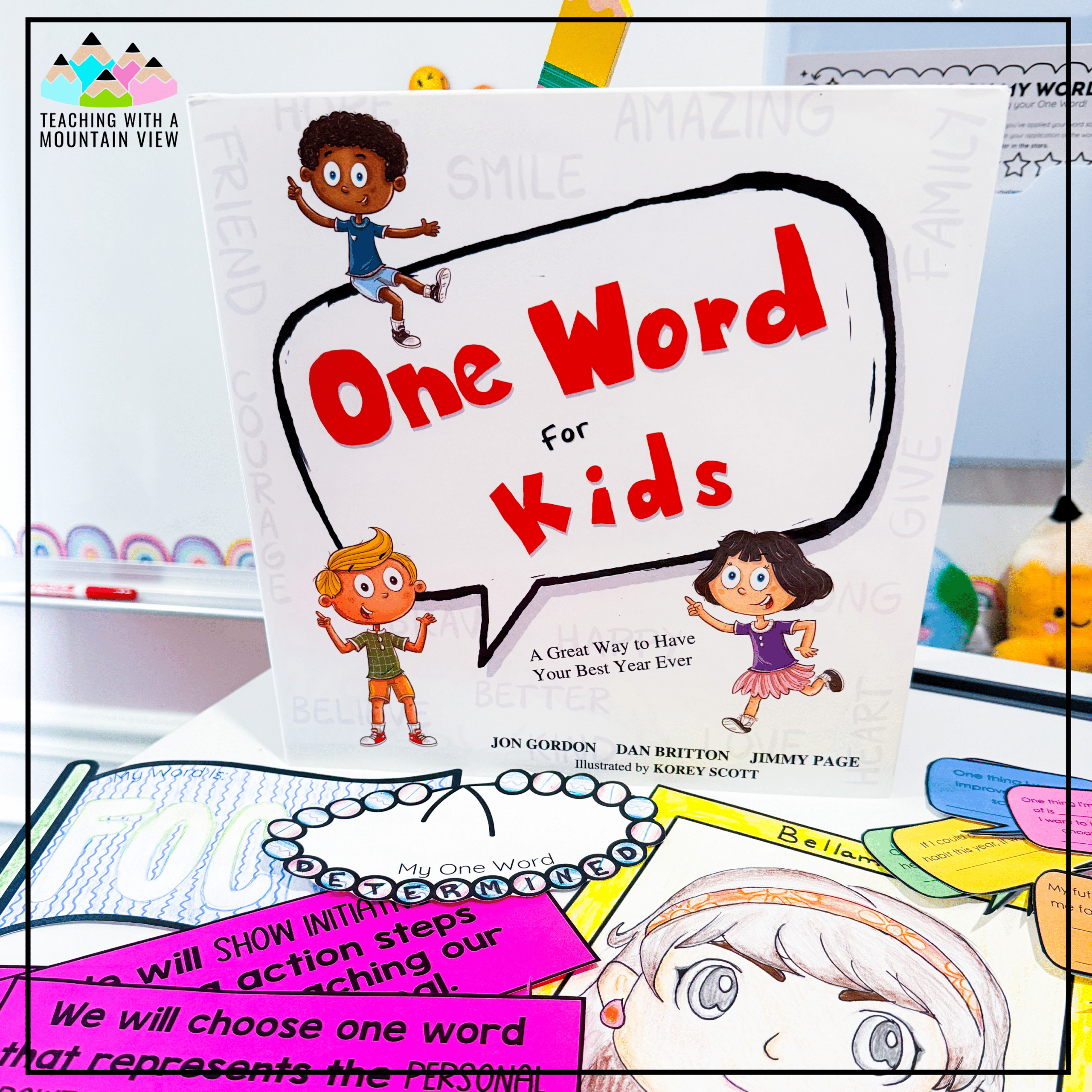
All of these lessons are based on the fabulous book One Word for Kids by Jimmy Page, Dan Britton, and Jon Gordon. You will need a copy of the book to implement them, or you can find one of the authors reading it here.
Why Set One-Word Goals?
Like many teachers, when we set off to make our yearly goals, I used to have students write a list of things they wanted to improve: read more, stay organized, participate more in class, get better at math… all great goals! The problem wasn’t the goals themselves. The problem was that, after the excitement of the first few weeks of school wore off, many of them were forgotten.
Instead of asking students to focus on five or six different goals, the one-word concept allows students to focus on just ONE WORD that can serve them in every area where they want to grow. This one word helps influence their decisions, reminds them of the person they wanted to become, and stays with them long after the beginning-of-the-year excitement has passed.
One Word for Kids helps students identify one meaningful word that becomes a daily reminder of who they want to be and how they want to grow! That word might be courage, patience, curiosity, focus, gratitude, perseverance, kindness, or something completely unique to each child. The important part isn’t choosing the “perfect” word—it’s choosing one that reminds students of the person they want to become.
As a bonus, it’s super easy for me, as the teacher, to keep track of each student’s goal and circle back to it throughout the year. That one word naturally becomes part of our classroom conversations. When students face a challenge or have a difficult decision to make, we can simply ask, “What would someone living your word do?” Suddenly, their word isn’t just something they wrote down during the first week of school. It becomes a lens they use to think through choices, solve problems, and reflect on their growth throughout the year.
Ready to Get Started?
If you already know you want to implement these amazing lessons, grab them now! I have included five full days of lesson plans to help your students set their One Word goals successfully and meaningfully!
How We Set Our One-Word Goals
Rarely is setting our one-word goals a one-day process, but this is often one of the biggest mistakes I see. We actually spend several days exploring what growth looks like, what it means to set goals, and what a meaningful one-word goal would actually look like for each individual student. By the time they choose their word, it isn’t just a random word they chose in a day. It’s full of meaning that kids can actually articulate!
I designed an ENTIRE five-day lesson plan to really help you and your students set goals, so if you’d like to maximize the impact, I’d highly recommend grabbing it!
Students brainstorm, discuss, write, and revisit their ideas several times before making a final decision. We watch videos of other people who have met goals, discuss their words, go through a slideshow that explains how to set their goals (and what NOT to do), and discuss a variety of scenarios, etc.
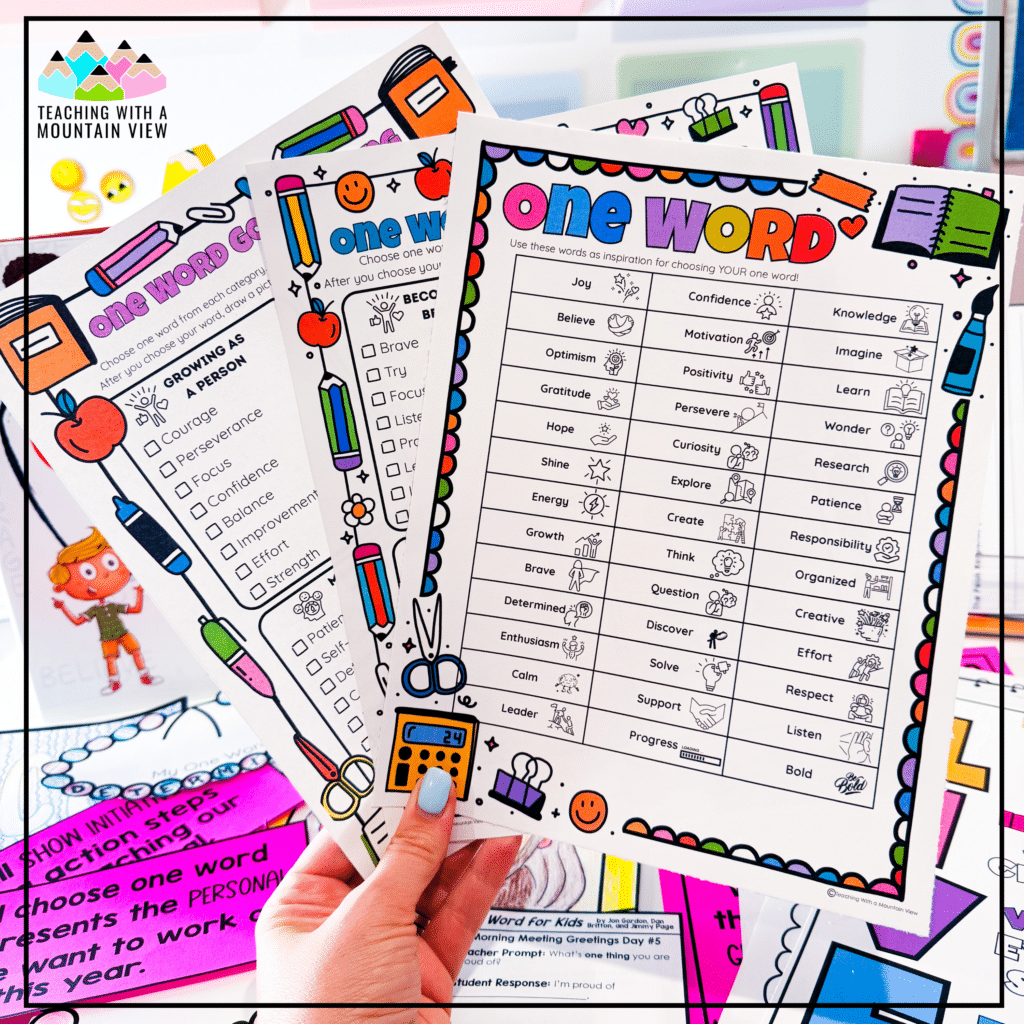
Questions I encourage students to ask themselves as they set their one-word goals:
- What kind of person do I want to become?
- What challenge do I want to overcome?
- What character trait would help me grow?
- What am I already proud of?
- What is something I’d like to improve?
- What do I want people to remember about me?
- What is one habit that would make a positive difference in my life?
Celebrating and Displaying our One-Word Goals
There is SO much beyond just choosing their one word. I make sure they are displayed prominently ALL year long so that they are actually words that anchor our choices. The last two years, we made the cutest friendship bracelets and keychains as reminders of our words, too. They were so much fun to make, and students loved them.
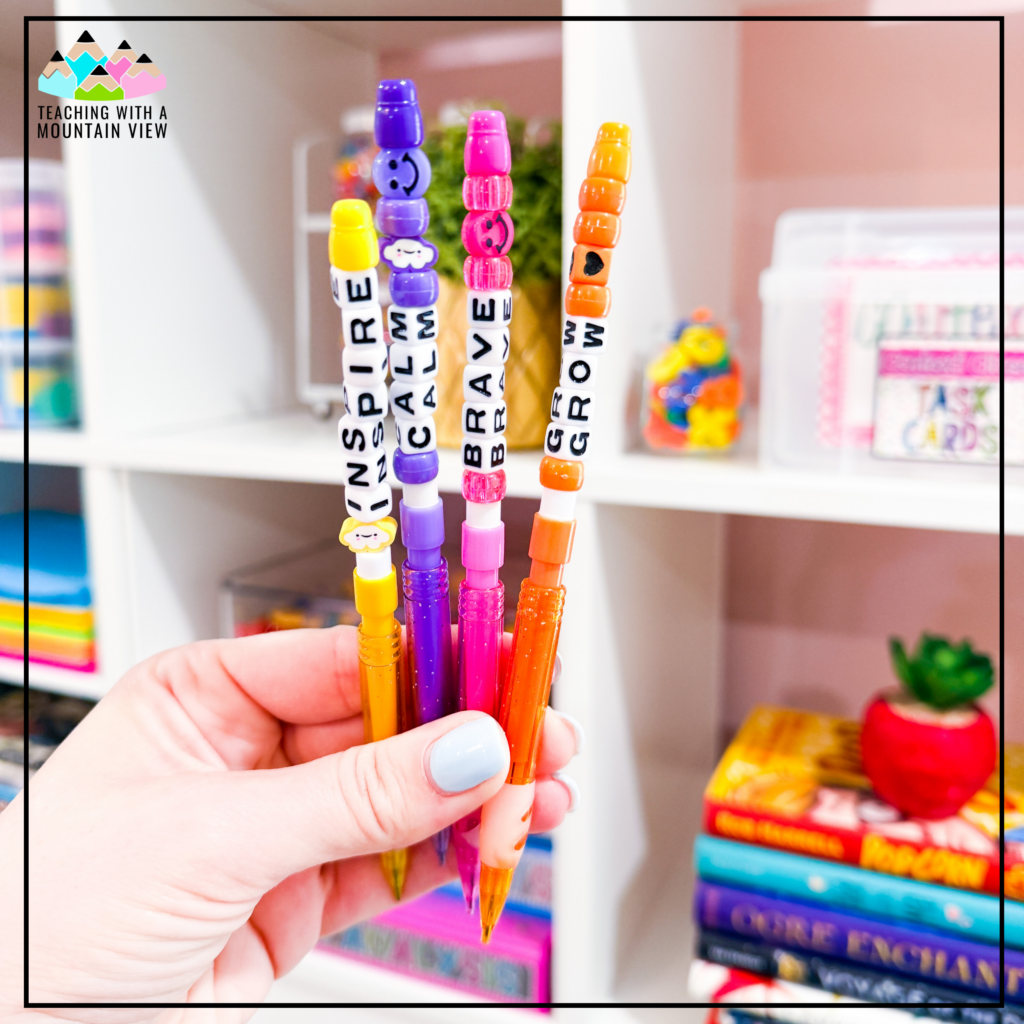
This year, we are making these super fun DIY mechanical pencils with our words! I have also considered having these mechanical pencils out on Meet the Teacher Night for students to make with their names on them!
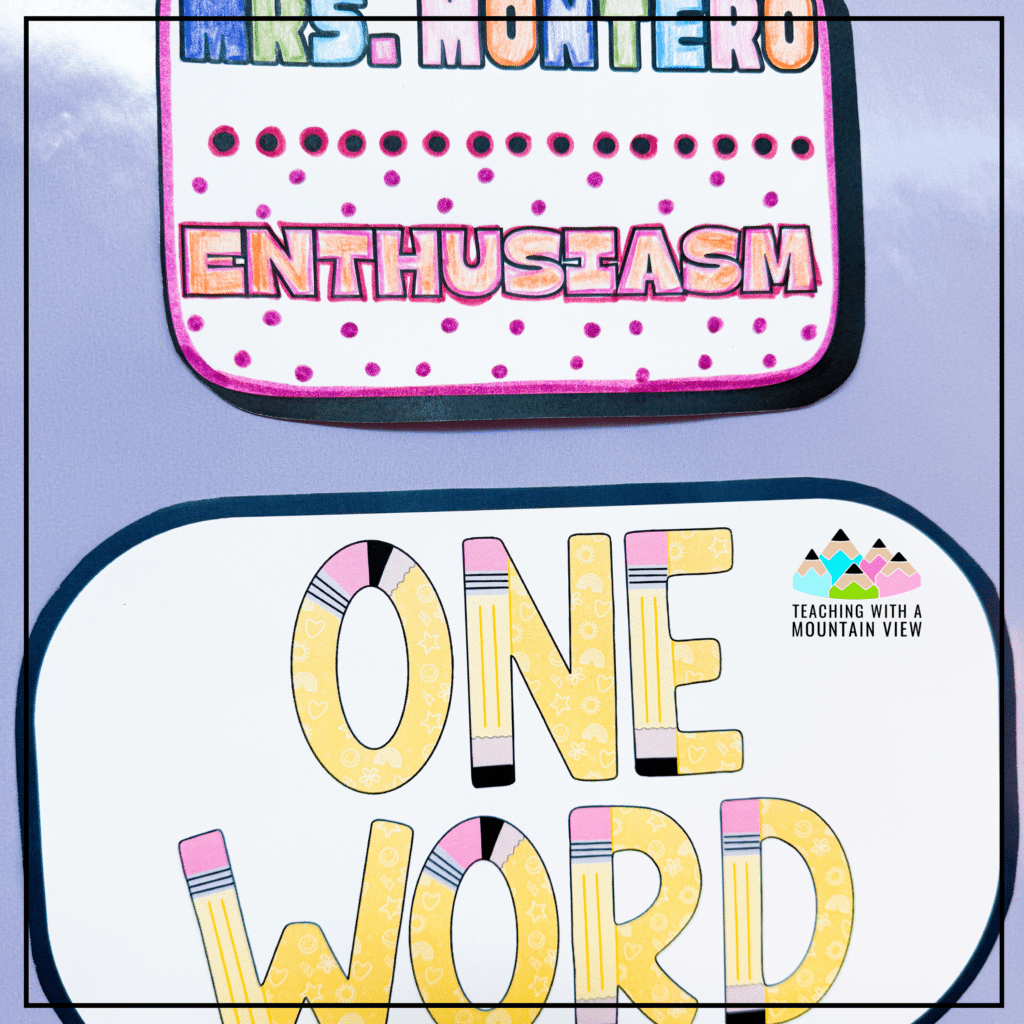
While both options are adorable, the real point is to make sure that students are actively engaged with their word! They should be hung up in your classroom and easy to reference all the time. I hung up a bulletin board this year that I LOVED! Here is an example, but picture my students’ words surrounding this on a big, beautiful bulletin board! The “ONE WORD” title was in the middle, and all of our words surrounded it.
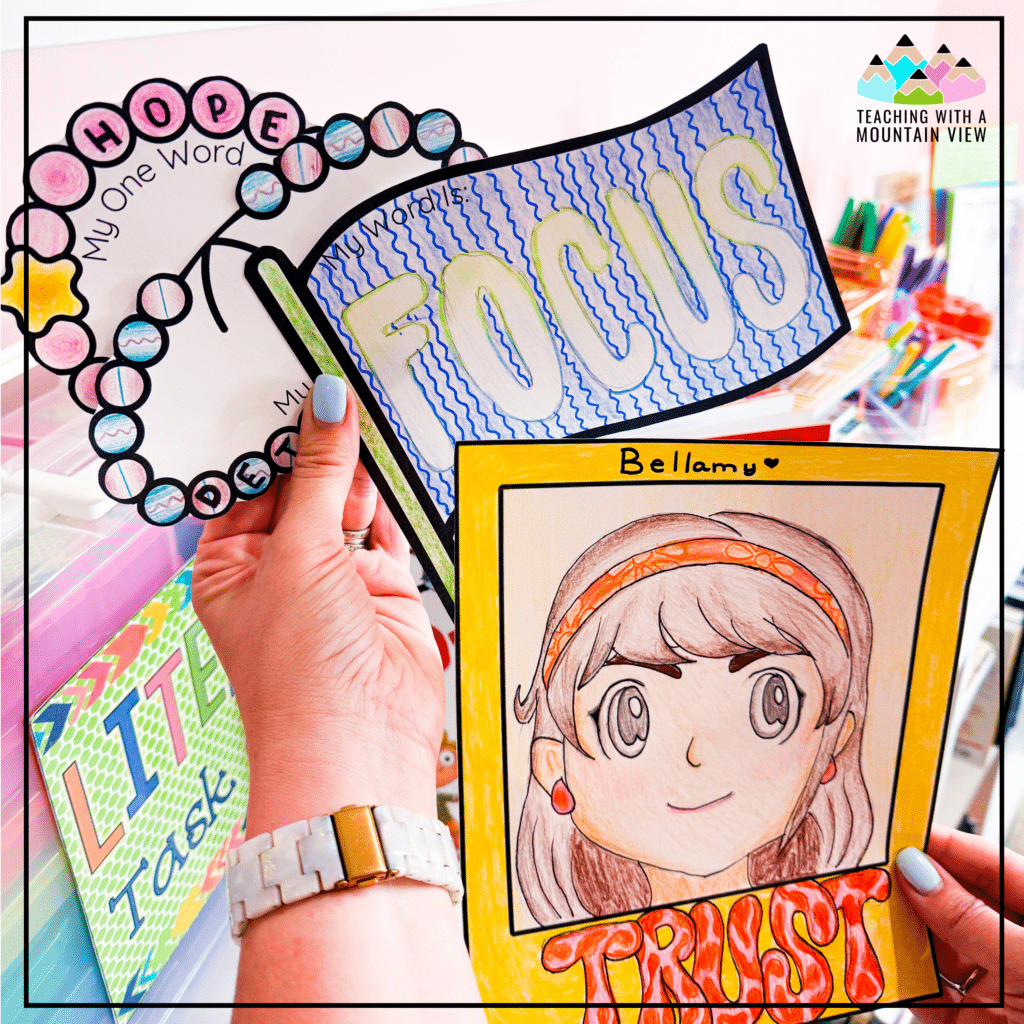
You can also make flags, portraits, or paper bracelets. The options are endless! Each of the options below is available in my One Word Book Unit.
Reflecting on Our Goals
Of course, the work isn’t done once the word has been chosen! My students reflect on their one word progress several times throughout the year with specific discussion questions and written responses.
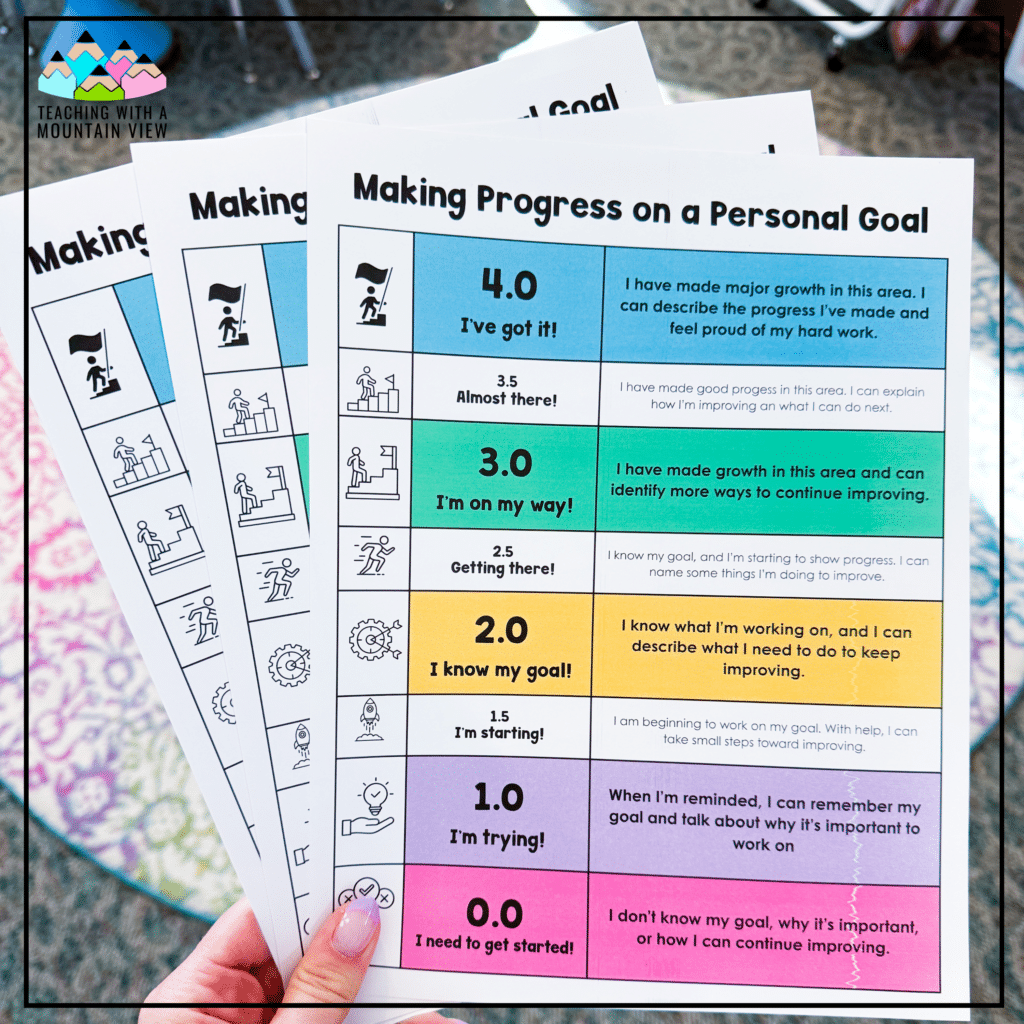
I also have a rubric I use to help students track their progress toward their goals. One of the things that always amazes me is that students almost never forget their one word. Months later, they can still tell you exactly what it is and why they chose it. That alone tells me this activity has become so much more than a beginning-of-the-year lesson.
Some of the reflection questions we revisit throughout the year include:
- How has your one word helped you this year?
- When was a time you intentionally lived your word?
- What has been the biggest challenge with your one word?
- If you could go back, is there a situation where you wish you had remembered your word?
- How have you grown since choosing your word?
- Would you choose the same word again? Why or why not?
Extending our Goals
Now, I know I talked a lot about how important it is to choose just one word. However, I do let students select more specific personal growth goals based on their one word! Once they’ve chosen their word and we are a little bit further into the school year, I give them a list of personal and character goals to work on. I remind them to tie these goals back to their one word (sometimes their one word IS their personal goal, and that’s great!).
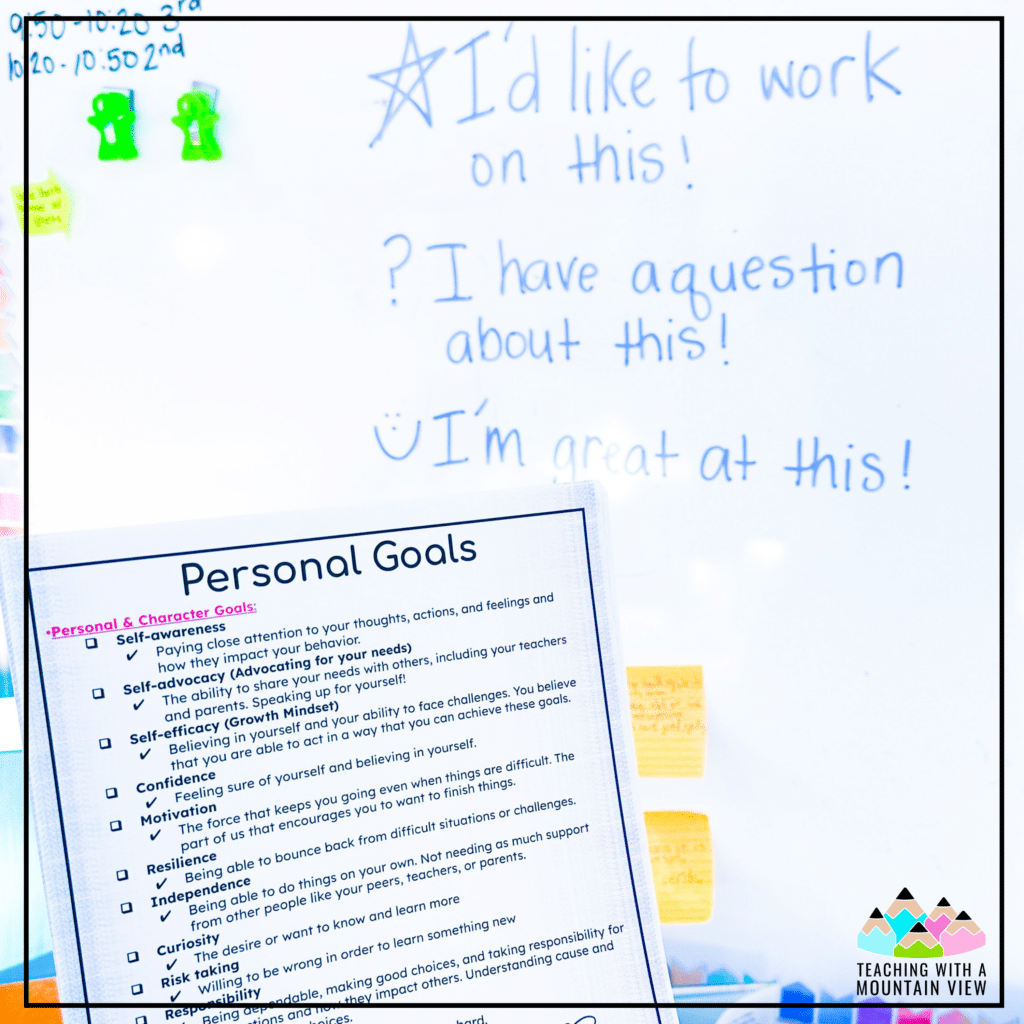
If you’re excited to bring the One Word concept into your classroom, I’ve put together a complete five-day companion to make implementation easy. It includes everything I use in my own classroom (yep! It’s all classroom-tested) —from discussion activities and lesson plans to reflection pages, classroom displays, and year-long check-ins—so you can spend less time planning and more time enjoying the conversations that make this activity so special.
No matter how you choose to introduce One Word, I hope it helps your students discover just how much they can grow this year!
Looking for even more back-to-school ideas?
I’ve got you covered! You can read even more about One Word here, or check out all the back to school blog posts below!
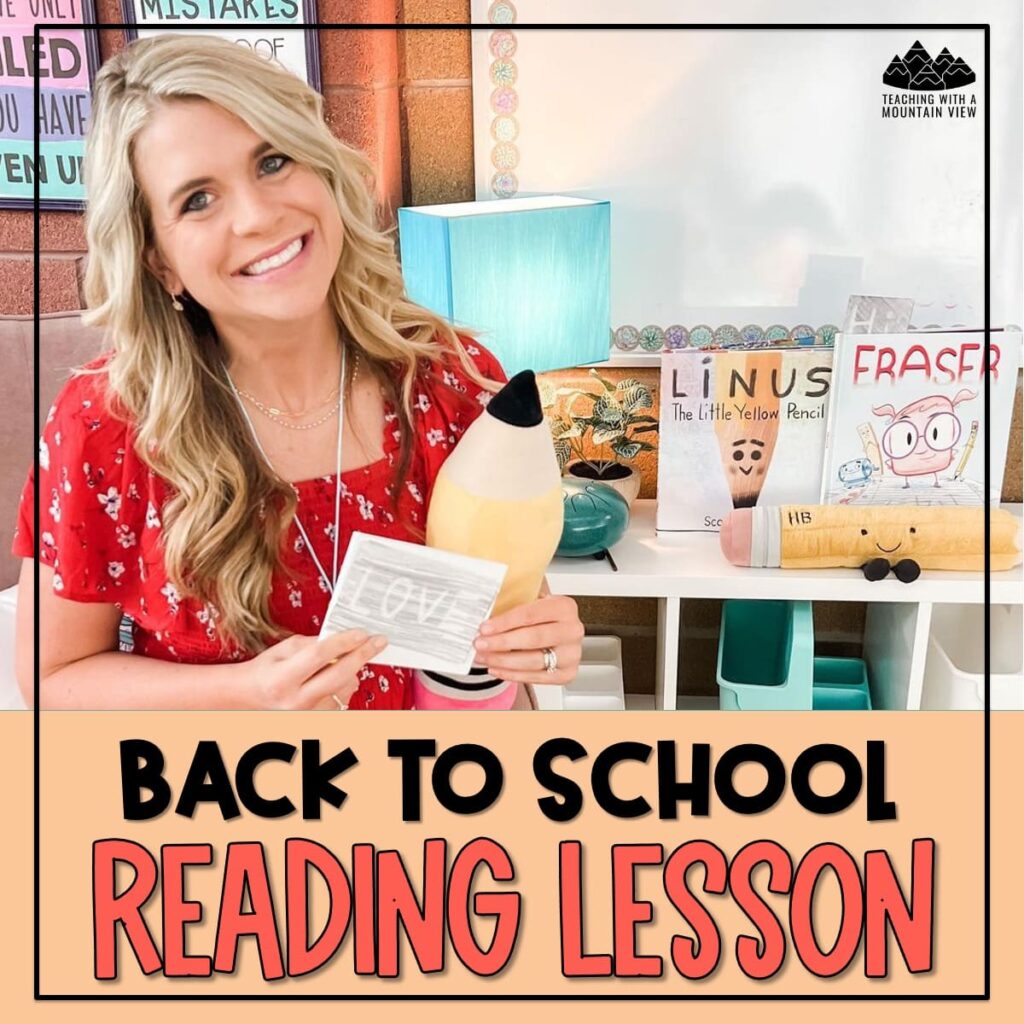
Back to School Reading Lesson
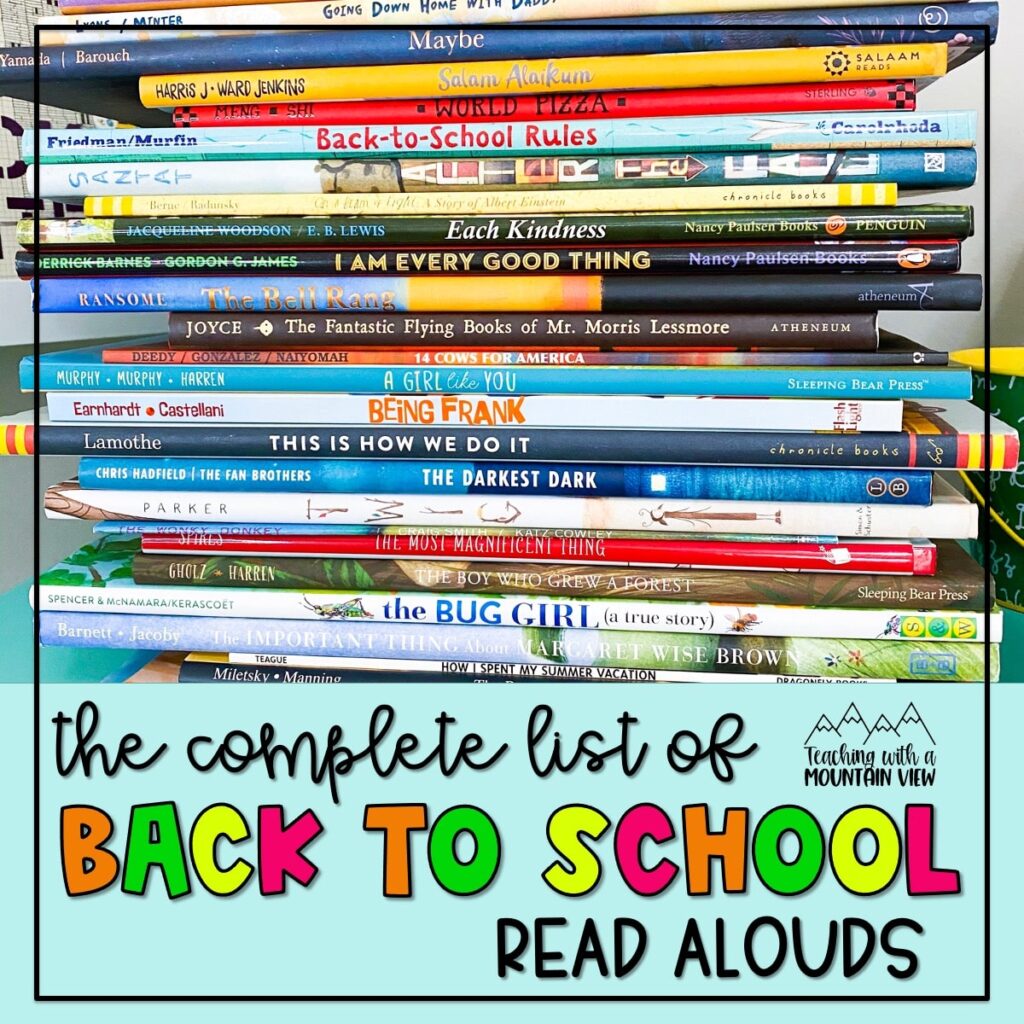
As a teacher, the beginning of a new school year is an exciting and busy time. One of the most…A Complete List of Back to School Read Alouds
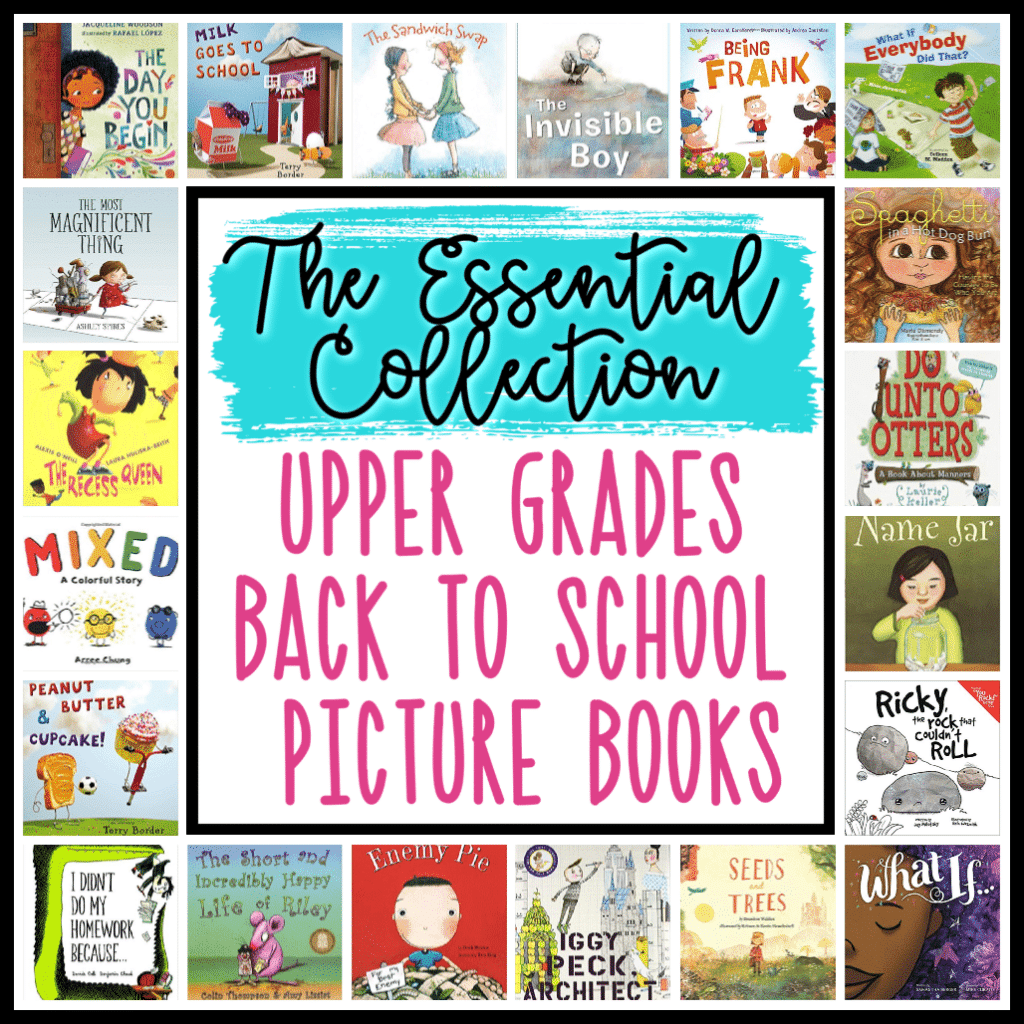
Back to school is a time filled with lots of emotions – anxiety and excitement included! (And I’m not just…
Mary Montero
I’m so glad you are here. I’m a current gifted and talented teacher in a small town in Colorado, and I’ve been in education since 2009. My passion (other than my family and cookies) is for making teachers’ lives easier and classrooms more engaging.