



I just finished preparing a group of students for a standardized test, and they CLUNG to this test prep strategy, so I knew I had to share it! I’ve been using this strategy to prepare students for state testing for YEARS and have shared it a few times here and there, but this multiple-choice test prep strategy is so powerful that it officially needs its own post!
In this post, I’ll walk you through exactly how the Pink Elephant Test Prep Strategy works, why it’s so effective for upper elementary test prep, and how you can teach students to use it in your classroom starting tomorrow (or TODAY!).
Looking for even more test prep support? I’ve got you covered!
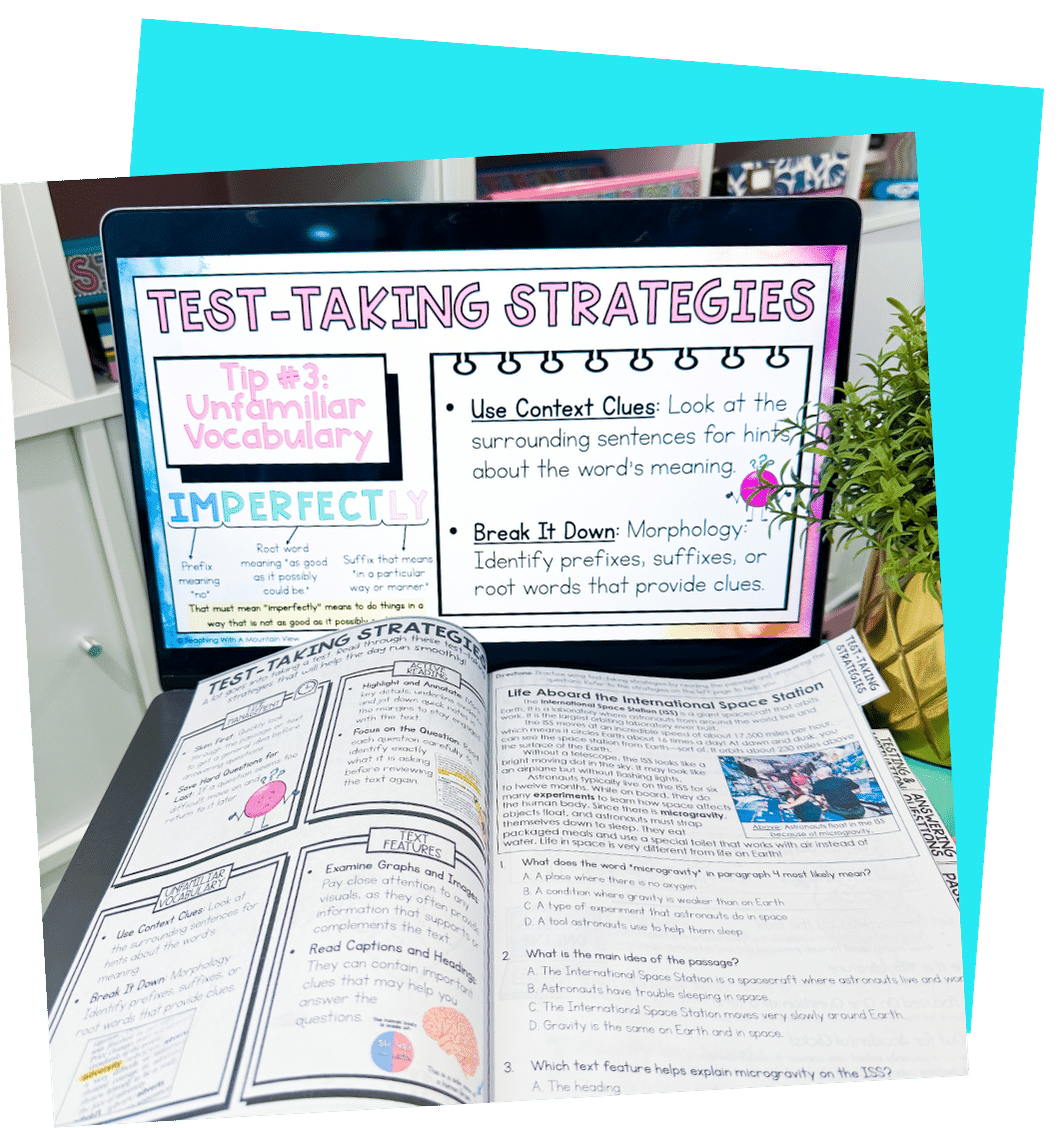
Grab Your Test Prep Toolkit!
Set your students up for test-taking success with this interactive resource! It helps students build confidence, learn essential test-taking strategies, tackle tricky test vocabulary, and identify common distractors—like the “pink elephant” answer choice that looks right at first glance but doesn’t quite fit.
The Pink Elephant Test Prep Strategy
If you’ve ever watched a student take a multiple-choice test, you’ve probably seen it happen (and maybe even cringed a little bit while you helplessly watched). They read the question, glance at the answers, and then immediately pick one that sounds or looks right at first glance… without slowing down to look closely at the details.
And that’s exactly where the “Pink Elephant Strategy” comes in.
One of the most powerful test-taking strategies for students is learning how to eliminate wrong answers before choosing the correct one. Most multiple-choice questions include at least one answer that students can quickly eliminate. But then, there is the answer that test designers have created to look almost correct at first glance. It contains familiar vocabulary, references the passage, or includes numbers or common error-laden solutions related to the problem. But if students take the time to look more closely at the question, something doesn’t quite fit.
That’s the pink elephant answer.
Just like spotting an elephant that looks normal from afar — until you look more closely and notice it’s bright pink — students learn to identify the answer choice that seems right at first, but has one small detail that makes it wrong.
Why Teaching this Test Prep Strategy Works
Teaching students how to find these “pink elephant” distractors can dramatically improve how they approach multiple-choice reading and math questions, especially during state testing and test prep season. Instead of guessing or rushing, students learn to slow down, analyze each choice, and eliminate the answers that don’t truly match the question.
Example Script for Introducing Pink Elephant Answers As a Test Prep Strategy:
“When you’re working on finding the answer to a multiple-choice question, there is very often an answer choice that I call the pink elephant.
Imagine you’re walking through the zoo and you see an elephant exhibit up ahead. At first glance, everything seems normal. It has a trunk, big ears, and a tail. But then you get closer, and the elephant comes into view… and you realize something is strange.
The elephant is pink.
That’s what the pink elephant answer looks like on a test. At first glance, it seems right. It might even include words from the passage or sound very convincing. But if you slow down and look closely, there is some detail that doesn’t quite fit the question and/or answer.
Test writers actually include answers like this on purpose. They want to see if students are reading carefully and thinking about the question.
So when you’re looking at your answer choices, ask yourself:
Is this the real answer… or is this the pink elephant?
If you find that one little thing that doesn’t match the question or the evidence in the text, you can cross that answer off right away.
Once you spot the pink elephant, you’ve already eliminated one answer choice and have fewer to work through!”
Whenever you are working through your test prep, be sure to consistently refer to the idea of the pink elephant. Students will catch on quickly (I’ve used this as young as 2nd grade) and LOVE pointing out all the pink elephants in the room!
By teaching students how to identify the “pink elephant” answer choice, you’re giving them a powerful test-taking strategy for multiple-choice questions that goes far beyond guessing. When students learn to slow down, analyze answer choices, and eliminate distractors, they become more confident and strategic test takers.
More Test Prep Strategies and Resources
The Best Test Prep Tips, Strategies, and Resources for Upper Elementary
The standardized testing season is an opportunity for students to showcase all of the incredible knowledge they’ve gained throughout the…Meaningful Test Prep Tips for Students
As you inch closer to state testing, do you ever feel like you’ve wasted the last few months on routine…

Mary Montero
I’m so glad you are here. I’m a current gifted and talented teacher in a small town in Colorado, and I’ve been in education since 2009. My passion (other than my family and cookies) is for making teachers’ lives easier and classrooms more engaging.